
In this article
Every glass of Rioja tells a story that started years ago, in the vineyard, in the cellar, and during its slow evolution in barrel and bottle. The taste of a Rioja wine is never defined by a single element: it’s the result of the region’s unique combination of grape varieties, landscape, winemaking tradition and time.
Understanding these layers helps explain why Rioja is often described as “the land of a thousand wines.”
What defines the unique taste of Rioja wine
Grape varieties that shape Rioja’s character
At the heart of Rioja’s taste lies its native grapes, either used as a single variety or carefully blended to achieve balance, complexity and longevity. Tempranillo — the region’s flagship variety — provides structure, harmony and notes of red fruit and licorice. Garnacha brings warmth and generosity, adding roundness and aromas of ripe red fruit, violets and mediterranean herbs. Graciano contributes freshness, colour and a spicy aromatic lift, while Mazuelo reinforces acidity, colour, and structure.
In whites, Viura remains the most planted grape, producing everything from crisp, youthful styles to elegant, oak-aged wines, while Tempranillo Blanco and Garnacha Blanca add aromatics and body.
Traditionally, Rioja has relied on blending rather than single-varietal wines, combining the best qualities of each grape, much like composing a symphony. This approach ensures balance and consistency, while allowing each producer to craft a distinctive interpretation of Rioja’s character. However, today there is a growing interest in monovarietal wines, as consumers look for more distinct, grape-driven expressions. Look out for elegant Garnacha reds or aromatic Tempranillo Blanco whites, for example.
To explore how aroma, flavour and texture differ between grape varieties, Rioja Wine Academy’s Tasting Essentials course offers a practical tasting approach.
Terroir and climate — From mountains to the mediterranean
Another aspect shaping the taste of Rioja wines and its diversity is the geography. The region stretches over 100 kilometres along the Ebro River, flanked by mountain ranges that shelter it from harsh weather and create countless microclimates. From the cool Atlantic influence in the west to the warmer Mediterranean conditions in the east, Rioja’s climate has an important impact on how grapes ripen and how flavours develop.
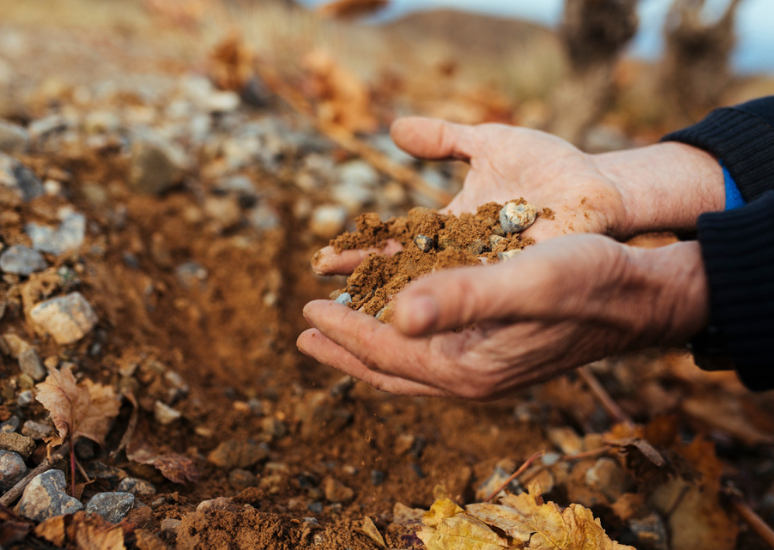
Higher-altitude vineyards yield fresher, more aromatic wines dominated by vibrant fruit and lower alcohol levels; lower, sunnier slopes produce fuller, rounder profiles with a riper fruit profile. The soil composition, from calcareous clay to iron-rich or alluvial, as well as its water holding capacity, also play a decisive role in each wine’s texture and aromas.
To explore these differences in detail, see our article “The Three Winegrowing Areas of Rioja: Alta, Alavesa and Oriental.”
Rioja wine styles and colour variations
Rioja is not one single style, but a spectrum of expressions: white, rosé, red and sparkling wines coexist under the same Denominación de Origen Calificada (DOCa). With more than 600 wineries, each with its own philosophy, from classic oak-aged to modern, terroir-driven interpretations, the region offers endless diversity and taste profiles.
Colour also tells part of the story: young reds display vivid purple tones, which gradually evolve to ruby and garnet hues as the wine ages. Whites range from pale straw to golden, depending on whether (and the amount of time) they are aged in stainless steel or oak barrels. And rosé wines range from pale pink wines, obtained through quick pressing, to more deep salmon color “claretes” obtained through cofermenting red and white grapes.
Winemaking techniques and oak ageing traditions
Rioja was one of the first regions in Spain to define wine classifications by ageing time. Oak ageing remains central to its identity, not just as a technique but as a philosophy. Wines rest in 225-litre oak barrels — traditionally American, now often French or mixed — where they gain complexity through controlled contact with oxygen though the pores of the oak, and with the oak itself.
Oak contributes secondary aromas, also called "winemaking" aromas: vanilla, coconut, spices, toast and subtle smokiness. More importantly, it softens tannins and adds texture. Depending on the type of oak and the length of time, these flavours can range from delicate and creamy to deep and toasted.
Classic bodegas still embrace long ageing in barrel and bottle, producing timeless Reservas and Gran Reservas with tertiary notes of leather, tobacco and dried fruit. Others focus on shorter ageing or single-vineyard precision, highlighting fruit purity and a sense of place.
Bottle ageing and the role of vintage differences
After barrel ageing, Rioja wines continue to evolve in the bottle. The cork allows micro-oxygenation, transforming bright fruit aromas into more mature, harmonious notes. This process is particularly important for Reserva and Gran Reserva wines, which often spend years resting in the winery before release.
Each vintage brings its own character, reflecting the weather patterns of that year. While traditional blends aim for stylistic consistency, terroir-driven wines express the nuances of every harvest — warmer years yielding riper, fuller wines, and cooler years bringing freshness and tension.
The aromatic profile of Rioja wines
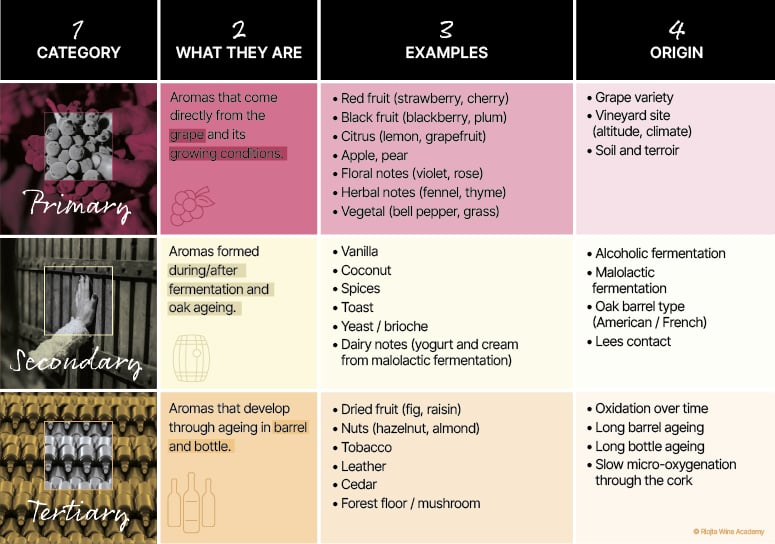
Primary aromas — Fruit, flowers, and terroir expression
These are the aromas that come directly from the grape and its growing environment. In young Rioja reds, you’ll find vivid red fruits like strawberry and cherry, alongside hints of violets or licorice. Sometimes you might even find a surprising note of bell pepper, in wines with the Maturana Tinta grape variety. In whites, expect apple, pear, and citrus, with floral or herbal touches that reveal the vineyard’s origin. Tempranillo Blanco, especially in warmer areas, can have a more tropical fruit character.
Secondary aromas — Fermentation and oak influence
These arise during winemaking. Oak ageing adds notes of vanilla, coconut and spices, while malolactic fermentation —the natural conversion of sharper malic acid into softer lactic acid— brings creaminess and subtle dairy nuances. Together, these aromas add depth and harmony, linking the fruit of the vineyard with the craft of the cellar.
Tertiary aromas — The evolution through time
As Rioja matures, its aromas evolve. Time in barrel and bottle leads to tertiary notes — dried fruit, nuts, tobacco, cedar, leather and forest floor. This complexity is the hallmark of the great Reservas and Gran Reservas. In these wines, every layer of aroma and flavour tells part of a long journey from vine to glass.
Exploring the diversity of Rioja wines
Every Rioja bottle tells its own story
With more than 65,000 hectares of vineyards and 600 wineries, Rioja offers a mosaic of expressions. The combination of grape variety, climate, soil, winemaking approach and ageing produces an almost infinite variety of wines. That’s why Rioja is often described as “the land of a thousand wines.”
Some producers focus on timeless blends that define the classic Rioja style, while others highlight the specificity of origin — creating zonal wines (vinos de zona), village wines (vinos de pueblo) and single vineyard wines (viñedos singulares), as explained in Understanding Rioja Wine Classifications.
How to taste and appreciate Rioja like a pro
When tasting Rioja, take your time. Observe the colour — its intensity and hue already tell you about the wine’s age. Swirl the glass to release its layers of aroma: first the fruit, then the subtle oak spices, and finally the tertiary notes that come with maturity.
On the palate, focus on texture and balance. Notice how acidity, tannin and alcohol integrate; how the flavours unfold; and how long they linger. A Gran Reserva, for instance, will fill the mouth with richness and persist long after the last sip — these are truly “wines to think about.”
Discover more with Rioja Wine Academy’s tasting essentials course
If you want to deepen your understanding of aroma, flavour and texture, explore Rioja Wine Academy’s Tasting Essentials course. You’ll learn to identify each stage of tasting — visual, olfactory and gustatory — and interpret what makes every Rioja unique. It’s a perfect next step to accompany your learning after reading about Rioja’s zones, grape varieties and classifications.
Post A Comment
See Comments